A city walk is more than distance covered. It is a changing mix of smells, sounds, crossings, people, and other dogs. Two walks of the same length may feel entirely different to your dog. Small choices about pace and route can make an ordinary block more enjoyable.
Try a different goal for the walk
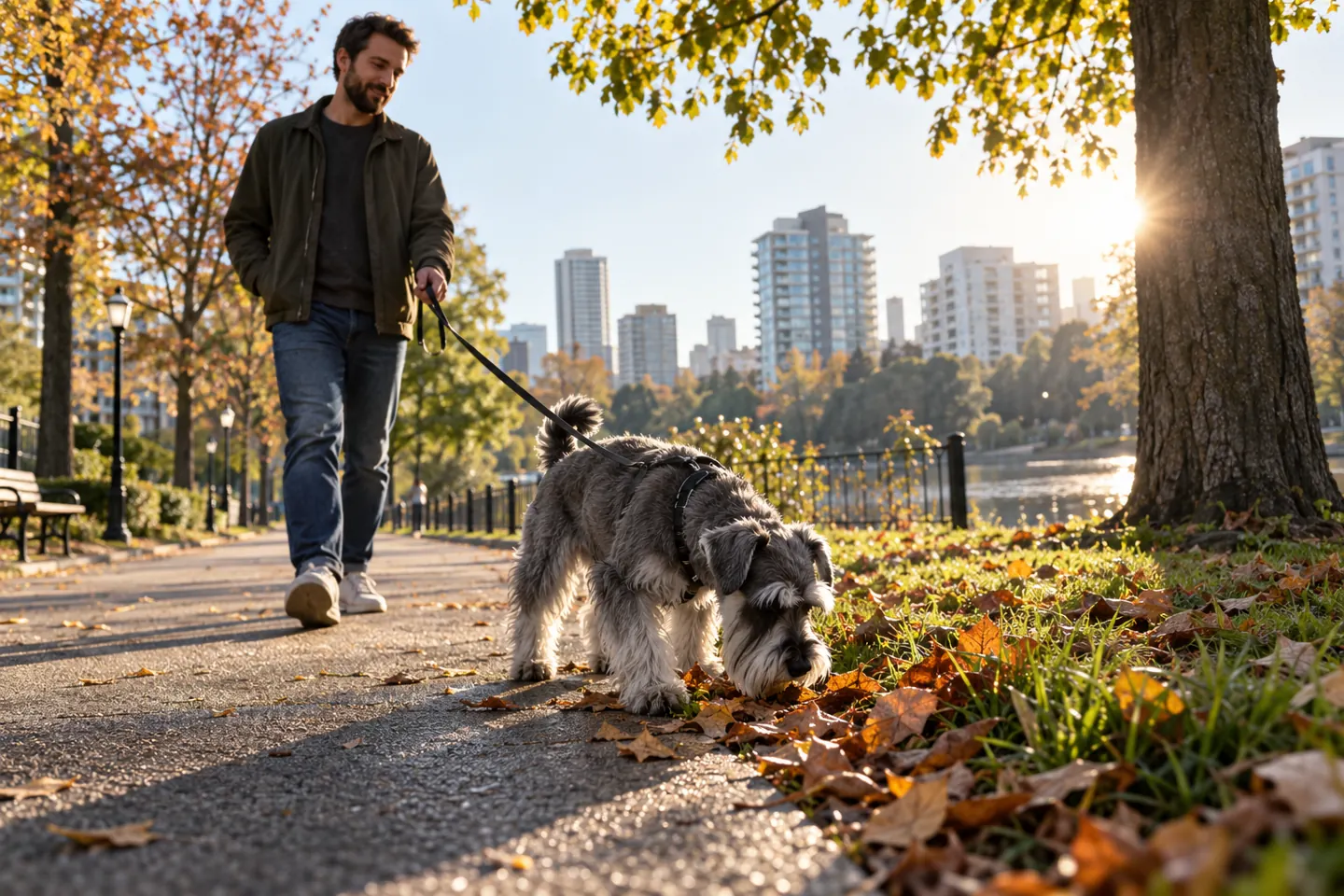
Some walks serve a practical purpose: get outside, take care of business, return home. Others can give a dog time to explore. Decide which kind you are taking before you leave. When the schedule permits, give your dog a few stretches where they can pause and sniff safely without being hurried from one tree to the next.
You do not need a distant park. A quiet side street with several places to investigate may be more pleasant than a straight line along noisy traffic. Keep the lead secure, watch for bicycles and litter, and guide your dog away from objects they should not pick up.
Learn the neighborhood’s rhythms
Walk the same loop at different times and you will notice patterns: school dismissal, delivery vehicles, busy patio hours, or a calm early period near the park. Choose a time that fits your dog. For a dog learning to navigate crowds, practice during a quieter hour before visiting the same area at peak time.
Weather changes the route too. Hot pavement is a concern for paws, particularly during summer afternoons. The ASPCA recommends care around hot asphalt and enough water and shade. Cold rain may call for a shorter outing and a towel by the door. Adjust duration to the dog in front of you, not the walk you had planned yesterday.
Give crossings their own routine
Pause back from the curb. Keep your dog close enough that you can move together, then cross at a steady pace. A predictable pattern makes a noisy intersection less chaotic. On narrow sidewalks, allow others to pass rather than threading the lead between people. Retractable leads can be hard to manage in dense foot traffic; choose equipment that lets you maintain appropriate control.
If your dog fixates on a passing dog or scooter, add distance where possible. Step into a wide driveway or cross earlier instead of waiting for the encounter to become difficult. You can practice calm attention in a space where your dog still has room to think.
Vary the walk without adding miles
- Reverse a familiar loop so the smells and views arrive in a new order.
- Add a quiet patch of grass or tree-lined block.
- Pause for a minute on a bench away from a busy path.
- Let your dog choose between two safe side streets.
- End after a pleasant stretch rather than continuing until everyone is tired.
These changes are small enough to test one at a time. A dog who prefers routine may appreciate predictability more than novelty, and that is useful information too.
Notice comfort before excitement
A dog can look busy without enjoying the walk. Watch their usual pace and willingness to explore. Repeatedly turning toward home, staying rigid, or struggling to recover after a loud encounter suggests the route may be too intense. Take a quieter option. If a sudden change in walking ability, breathing, or behavior concerns you, seek veterinary advice rather than treating it as a training problem.
Let other dogs pass without insisting on greetings. An on-leash hello can be awkward on a narrow sidewalk, and unfamiliar dogs may need space. Ask before approaching and be ready to move along if the answer is no.
Make the return home part of the plan
End the walk with a calmer block where possible. Wipe wet or dirty paws with an appropriate towel and offer water. Keep the leash, bags, and walking gear by the door so the next outing starts smoothly. For longer excursions, our packing guide helps you prepare without carrying a full day’s kit on every neighborhood walk.
You can keep a mental note of what worked rather than measuring every step. A good city walk leaves your dog ready to rest and you ready to go again.
What to do when the street suddenly gets busy
A school group, delivery truck, or construction detour can change a familiar walk without warning. Pause where you have room and let the traffic pass. Cross to a calmer side if that is safe, or turn around. You are not required to keep the planned route because it was quiet yesterday.
If your dog startles at a sound, give them space to recover. Resist pulling them immediately toward the source to prove it is harmless. A few steps away and a calmer path may help them resume exploring. For ongoing fear or difficult behavior, a qualified trainer or veterinary professional can help you make a tailored plan.
A route diary without an app
You can remember three details after each walk: the time, the busiest spot, and the moment your dog seemed most relaxed. A week of these observations may reveal that an earlier departure or one parallel street makes a meaningful difference. You do not need to measure every minute or turn walking into a performance target.
Make one change at a time. Try a different start time while keeping the same route, or keep the hour and reverse the loop. That makes it easier to understand what your dog prefers.
Longer walks are not always better
A long walk with repeated stressful encounters can leave a dog less settled than a shorter, calmer outing. Offer variety through sniffing, a familiar game at home, or a new but gentle route. Match activity to the dog’s age, condition, and advice from your veterinarian, especially if exercise tolerance has changed.
Even energetic dogs can benefit from pauses. Let a pleasant walk end while the dog still seems comfortable. You can go out again later rather than trying to fit the entire day into one outing.
Share the sidewalk gracefully
If the path becomes narrow, shorten the lead and let someone pass. Notice open doors, ramps, and building entrances. Pick up waste every time and avoid leaving bags by a tree. These are small choices repeated often, and they make the difference between simply owning a dog in the city and living well alongside neighbors.
Keep a short walk interesting
If your dog has only a few minutes, choose a route with room to sniff rather than trying to walk fast enough to compensate for the clock. Move away from heavy traffic, allow a small pause, and finish calmly. Later, when you have more time, you can take the longer path.
A walker who knows when to stop offers the dog something valuable: predictability. The city may be noisy, but your shared routines can still be steady. Start with one adjustment this week, notice the result, and keep what helps.
Try a calmer final block
As you approach home, take the quieter side of the street if you can. Give your dog one last chance to sniff before entering the building. The return journey is still part of the walk, and a steady finish can help everyone settle. If the route became stressful, make a note of the corner, hour, or distraction that changed it. Next time, choose another path or allow more distance. A city walking routine improves through small adjustments, not through forcing the same route every day.
Confirm the current rules of each destination and shape the plan around your own dog’s comfort. For a sudden health concern, contact a qualified veterinarian.