Outdoor events can sound dog-friendly until you reach the entrance. Crowds, loudspeakers, food on the ground, narrow queues, and unfamiliar dogs change what an otherwise easy walk feels like. The first decision is whether your dog is allowed; the second is whether this particular event will be enjoyable for them.
Confirm entry before making plans
Read the event organizer’s current pet policy. A park may allow leashed dogs on ordinary days while a ticketed event there prohibits them. A “pet-friendly” neighborhood may still contain venues with separate rules. Check the event page, venue page, and ticket terms; if they disagree, ask the organizer. Do not assume that outdoor seating, a parking lot, or a service-animal exception means ordinary pets may enter.
Check bags too. Security screening may restrict bag size and contents, even for open-air events. A guide to venue bag policies can help you identify questions to ask, but the event’s own published rules should settle what you actually bring. Keep pet supplies in a bag that meets the applicable entry rules rather than repacking at the gate.
Decide whether the environment fits
Look at the event’s hours, expected crowd pattern, layout, and sound. An uncrowded daytime craft market is different from a packed evening concert. If your dog reacts strongly to amplified sound, close contact, or unfamiliar dogs, choose another outing. Puppies and dogs still learning to settle may benefit more from short practice visits around quieter places.
You need an exit route, not just an entrance. Locate a calm street or park path nearby and decide how you will leave if the dog has had enough. If driving, planning event parking and arrival ahead of time can reduce the time you spend navigating a crowded perimeter. Confirm current lot rules and access with the venue itself.
Make arrival the easy part
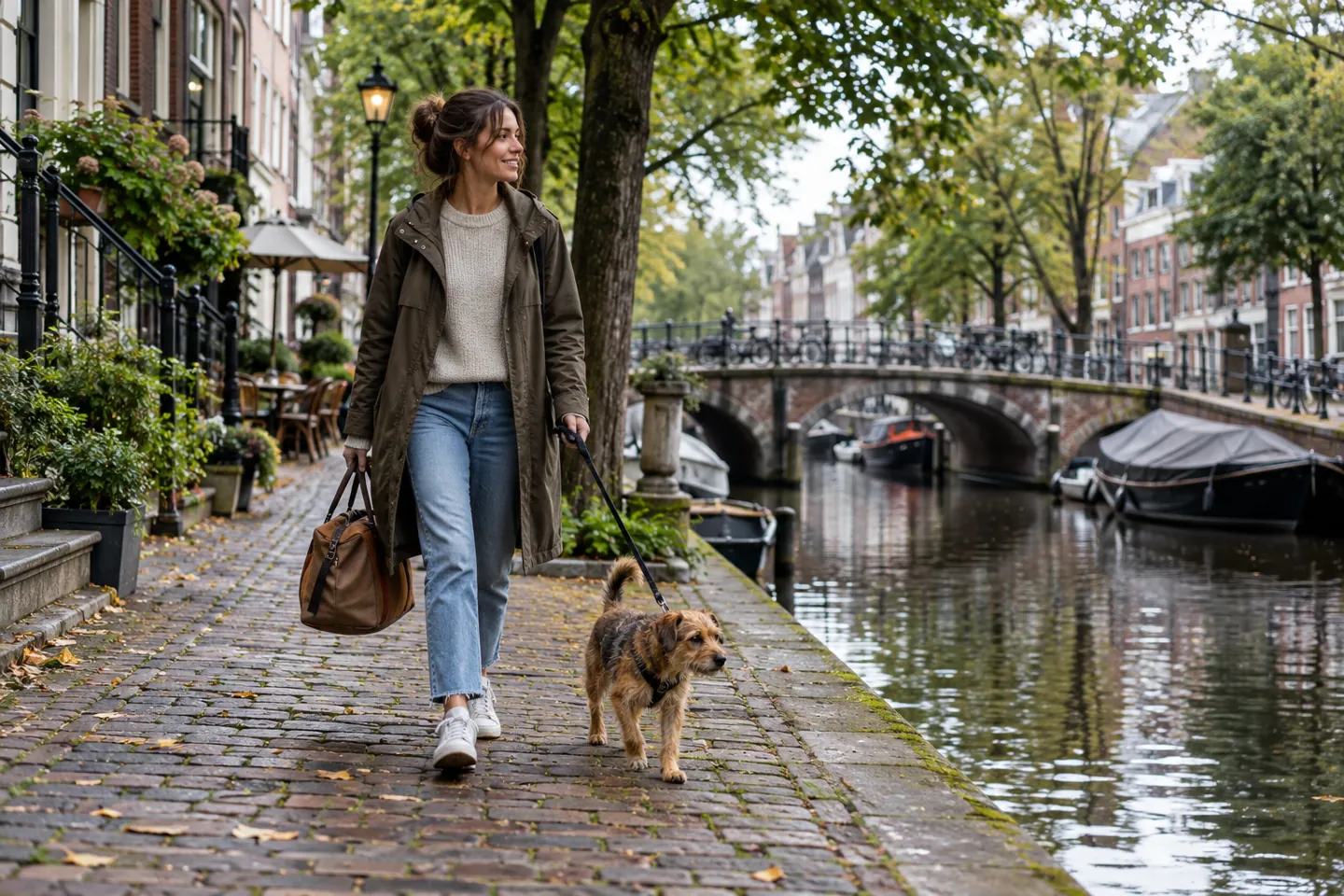
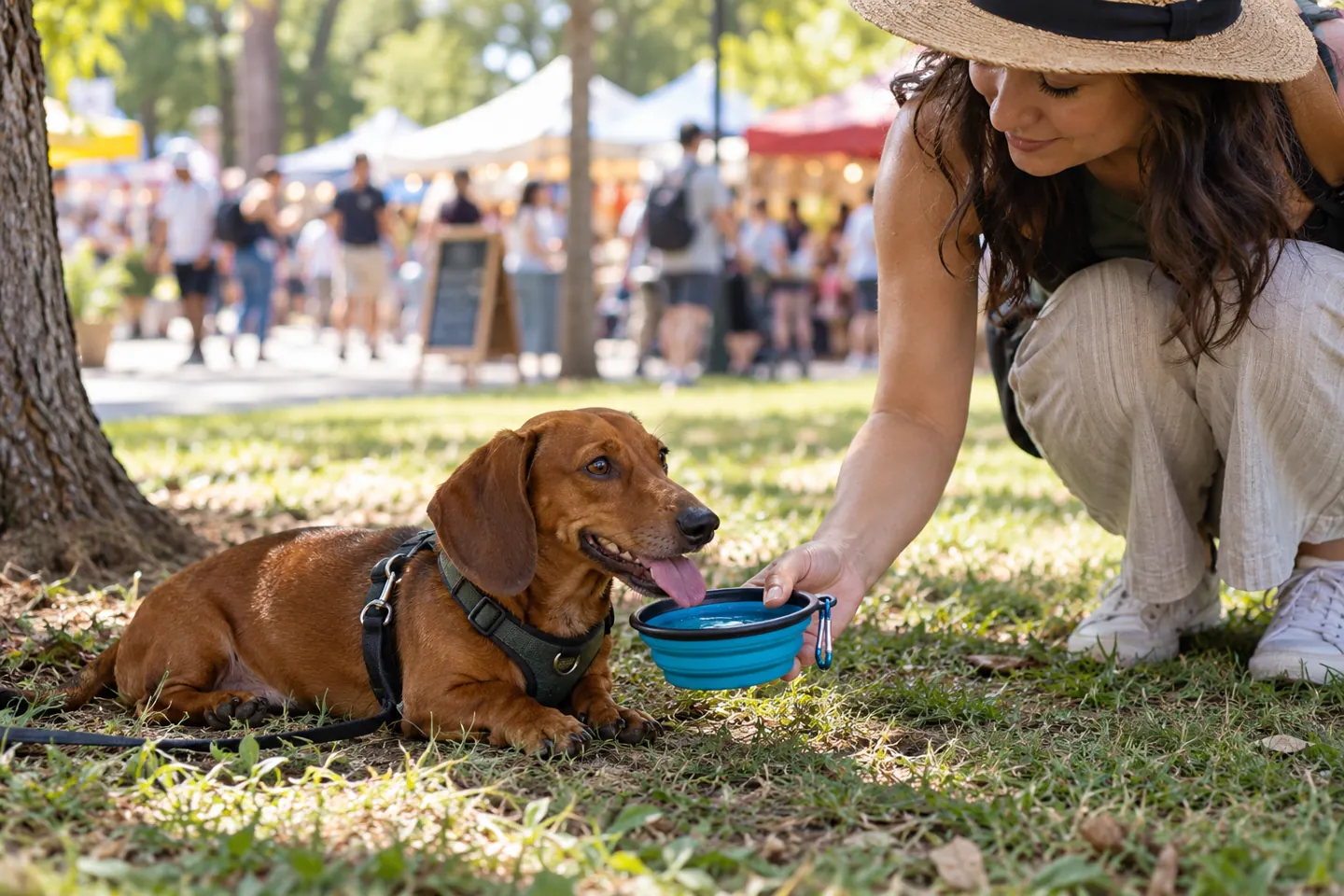
Arrive before the peak when possible. Walk your dog in a calmer area first so they can move and sniff. Offer water before joining a line. Keep enough distance from other dogs that greetings are optional. A short lead helps in queues, but hold it without tension and avoid blocking people moving through the entrance.
Some dogs do better watching the activity from the perimeter. You do not need to work toward the center of the crowd. Choose a position with space to step away and somewhere to rest. If you cannot find one, leaving may be the kinder choice.
Carry a small, useful kit
- Water and a portable bowl.
- Waste bags plus a spare bag for used items until you find a bin.
- A secure lead and identification with current contact details.
- Familiar treats and, if appropriate, a small mat for a clean resting place.
- A towel when rain or mud is likely.
Carry only what you can manage while holding the lead. Our full-day packing list helps you adjust for a longer event. Never rely on vendors to have dog-safe food or water available.
Watch the dog, not the schedule
Pause often and look for changes from your dog’s normal behavior. A dog who cannot settle, tries repeatedly to leave, or becomes withdrawn may need more space. Move away from speakers and dense foot traffic; do not wait for the last act or your planned departure time. In warm weather, pavement, limited shade, and queues make overheating a particular concern. The ASPCA’s summer safety advice is a practical reference; seek veterinary care promptly for concerning symptoms.
Keep your dog away from discarded food, alcohol spills, and fireworks. Do not let strangers pick up a small dog without your consent. A friendly event can still be an unpredictable setting, so give your dog space to opt out of contact.
When going without the dog is better
For concerts with heavy bass, fireworks, extremely crowded festivals, or a long day without shade, consider leaving your dog safely at home. There is no lost opportunity in protecting their comfort. If you do attend together, treat the visit as a flexible trial: a short, pleasant hour is better than staying until a dog is overwhelmed.
The most successful event plans begin with clear entry rules, a simple route, and permission to leave early. The dog’s experience should determine how long you stay.
Think through the entrance queue
The event may welcome pets and still have a difficult line. Look for a quieter arrival window and enough space to stand without your dog being stepped over. Keep the lead short enough for control while allowing the dog a comfortable position. If the queue wraps along a loud road or there is no shade, decide in advance how long you will wait before leaving.
Check whether a re-entry policy exists if you plan to take a break outside. Do not assume you can come back once a ticket is scanned. If you are attending with another person, agree on an exit signal so neither of you needs to negotiate the decision in the middle of a noisy crowd.
Food and other people
Outdoor events create a moving buffet of dropped snacks, napkins, and cups. Scan the ground before stopping. Keep your dog out of reach of shared food areas and avoid offering unfamiliar festival treats. If someone asks to pet the dog, you can decline without a long explanation. Ask children to let you guide any interaction; a dog at an event may have less patience than at home.
Other owners may assume the dogs should meet. You can keep walking. Crowded greetings with leads tangled around legs are rarely a good introduction. Move to an open edge if you need to pause.
Make a shorter visit count
Pick one thing to enjoy, such as browsing a single row of stalls or watching a performance from far enough away to speak normally. Find a comfortable place for a water break. Then decide whether to continue. A dog who can settle after twenty minutes is giving you useful information; a dog constantly scanning for escape is too.
If you leave early, take a quiet walk away from the event before getting into a vehicle or onto transit. Let the dog decompress rather than heading straight from loud music into another tight space. A calmer journey home can preserve the best part of the experience.
A reasonable no-dog alternative
There are events better enjoyed with a friend while your dog rests at home. This is especially true when the main activity requires your attention, the venue cannot confirm pet access, or there is no comfortable exit. You can take your dog on a separate walk before or after the event. Planning for their needs sometimes means making two different plans for the day.
Questions to ask the organizer
If the published rules are unclear, ask whether ordinary pet dogs may attend, whether access varies by area, whether there are sound effects or fireworks, and whether leaving and returning is permitted. Ask about the expected busiest period. The answers can save a difficult arrival, but remember they describe the event, not your dog’s response to it.
At the event, reassess after each change in noise or crowd density. An enjoyable start does not obligate you to stay once conditions shift. Walking out while the dog is still doing well can make future outings easier.
Confirm the current rules of each destination and shape the plan around your own dog’s comfort. For a sudden health concern, contact a qualified veterinarian.